Quantum Error Correction Reaches Critical Scalability Threshold
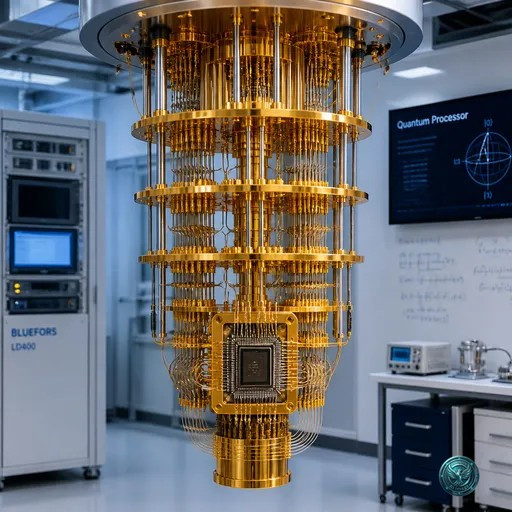
In what many physicists are characterizing as a decisive turning point for the discipline, a multi-institution research collaboration has successfully demonstrated fault-tolerant quantum error correction operating continuously past the physical qubit threshold. The milestone, detailed in recent publications across leading peer-reviewed journals, addresses the single greatest obstacle in modern quantum information science: the inherent fragility of quantum states when exposed to environmental noise.
For decades, the pursuit of quantum computing has been plagued by the 'no-cloning theorem' and the inevitability of decoherence. Unlike classical bits, which are robust binary states of zeros and ones, quantum bits—or qubits—exist in delicate superpositions. Stray electromagnetic fields, thermal fluctuations, and even minute material imperfections can induce phase flips or bit flips, corrupting computations before they yield usable results. While theoretical models have long suggested that encoding logical qubits across dozens or hundreds of physical qubits could mitigate this issue, practical implementations have struggled with a destructive paradox: the hardware required to correct errors introduced more physical components, which in turn generated more noise.
The breakthrough hinges on a refined topological architecture combined with real-time syndrome extraction algorithms. Rather than halting operations to measure errors—a process that introduces unacceptable latency and thermal loads—the research team deployed a dynamic, mid-circuit measurement feedback loop. Utilizing superconducting circuit arrays cooled to millikelvin temperatures, the system identified and neutralized bit and phase errors simultaneously without collapsing the underlying logical state. According to benchmark metrics released by the consortium, the logical error rate decreased exponentially as the number of physical qubits in the error-correcting patch increased, confirming the theoretical predictions of fault-tolerant thresholds.
Dr. Elena Rostova, a senior theoretical physicist specializing in quantum error mitigation who was not directly involved in the study, noted the significance of the achievement. 'We have moved past the era of noisy intermediate-scale quantum, or NISQ, systems where sheer raw qubit count was the primary metric of success,' Rostova explained. 'This demonstration proves that the overhead penalty of error correction is not a perpetual bottleneck. We now have empirical validation that scaling up does not inherently dilute fidelity.' This shift from quantity to quality alters the roadmap for academic laboratories and commercial entities alike, establishing a rigorous standard for hardware evaluation.
The implications of this development extend far beyond accelerated computing benchmarks. In fundamental quantum physics, the ability to maintain coherent states over extended operational windows allows researchers to simulate complex molecular interactions, high-temperature superconductivity, and quantum chromodynamics with unprecedented precision. Chemical engineering and materials science stand to benefit immensely, as the simulation of molecular catalysts—currently intractable for classical supercomputers due to the exponential scaling of quantum chemistry equations—becomes feasible within a controlled, error-corrected environment.
Despite the optimism, commercialization and widespread deployment remain distant horizons. The infrastructure required to maintain large-scale superconducting circuits demands extreme cryogenic isolation, high-density coaxial wiring, and sophisticated digital-to-analog control hardware that currently occupies entire room-sized facilities. Furthermore, translating this architectural success from superconducting platforms to alternative modalities, such as trapped ions, neutral atoms, or photonic systems, will require specialized engineering adaptations.
Industry analysts emphasize that while the physics has been validated, manufacturing consistency remains a formidable hurdle. Fabricating thousands of physical qubits with the uniformity required to execute real-time syndrome extraction demands semiconductor-grade cleanroom precision that pushes current lithography techniques to their absolute limits. Consequently, the transition from laboratory demonstration to enterprise-grade utility will likely be measured in years rather than months.
Nevertheless, the psychological and scientific barrier has been breached. By proving that fault tolerance is an achievable reality rather than an asymptotic ideal, the research establishes a solid foundation for the next decade of quantum exploration. As laboratories worldwide begin replicating and building upon these protocols, the focus of quantum physics shifts from surviving environmental interference to harnessing it, opening a new chapter in our mastery of subatomic phenomena.


