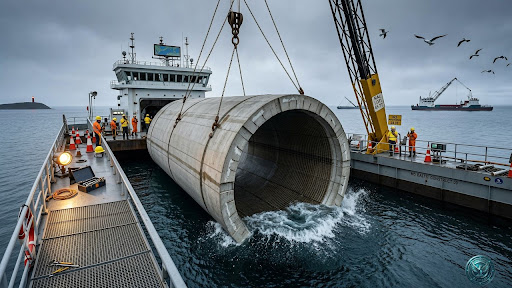
Automated Port Cranes Rise Above The Foggy Port Of Vancouver
For decades, the movement of containers across the Vancouver waterfront relied on human-operated straddle carriers and manual coordination. Today, the integration of 5G-enabled remote operating centers and AI-driven predictive logistics is shrinking the dwell time of cargo. This transition is essential as the port contends with increasing volumes and the physical constraints of a geography wedged between rugged mountains and the Pacific Ocean.

Overcoming the Physical Constraints of the Pacific Coast
Geographic limitations have long dictated the pace of Canadian logistics. Unlike the expansive, flat ports of the U.S. Gulf Coast, Vancouver is constrained by shoreline depth and proximity to urban residential zones. To expand capacity without expanding the footprint, port authorities are prioritizing vertical density and automated stacking systems.
These systems utilize automated stacking cranes (ASCs) that operate in high-density blocks, allowing for a significantly higher throughput per acre. By reducing the reliance on human drivers navigating tight, congested lanes, the facility minimizes the risk of yard accidents and optimizes the movement of containers from ship to rail. This efficiency is critical for the seamless transfer of goods into the Canadian interior.
The Rail-to-Sea Synchronization Challenge
The success of Vancouver’s modernization rests on the synchronization of marine terminals with Canada’s transcontinental rail networks. The bottleneck has historically been the handoff between the terminal gates and the rail sidings. New investments in proprietary software suites now allow rail operators to see real-time, granular data on container availability before a train even arrives at the terminal.
This "just-in-time" logistics model reduces idling times for locomotives and maximizes the length of outbound trains. By aligning the cadence of the crane operators with the arrival of heavy freight, the port is effectively turning its limited real estate into a high-velocity conveyor belt.

Resilience in the Face of Global Supply Chain Shifts
The push for automation is also a strategic response to labor shortages and the increasing frequency of climate-related disruptions. Wildfires and extreme weather events in British Columbia have historically paralyzed the rail lines leading to the coast. Through the deployment of advanced predictive analytics, the port can now simulate various disruption scenarios to reroute cargo and prioritize essential goods.
This digital resilience ensures that even when physical infrastructure is strained, the flow of commerce remains predictable. Stakeholders are no longer viewing the port as a static storage location, but as a dynamic node in a global network. The shift towards automated, data-driven management is providing a blueprint for other North American ports struggling with similar capacity and labor constraints.
Future-Proofing the North American Trade Corridor
As the port looks toward the next decade, the focus is shifting toward environmental sustainability integrated with efficiency. New automated equipment is increasingly electrified, reducing the carbon footprint of terminal operations significantly. This dual-purpose strategy of increasing output while lowering emissions is becoming the gold standard for modern logistics.
Ultimately, the modernization of the Port of Vancouver serves as a bellwether for North American trade. By embracing automation, the region is securing its status as a reliable gateway. The integration of technology into the physical landscape of the waterfront is not just about moving boxes faster; it is about ensuring that the Canadian economy remains competitive in an era of rapid global change.